
For over two decades, investing in the federal capital followed a predictable, high-brow formula: buy a property in Maitama, Asokoro, or Wuse 2, lock it up, and watch your prestige scale. But in 2026, the real estate playbook has completely changed.
The Abuja real estate market today is experiencing a definitive shift from luxury prestige to structural quality and high-ROI infrastructure corridors. Driven by aggressive Federal Capital Territory (FCT) road expansions, persistent Naira volatility hedging, and a massive surge in demand for flexible short-let hubs, smart money is officially leaving the oversaturated legacy core.
If you want to maximize your capital in Nigeria’s capital city right now, here is exactly where the market is moving and how industry leaders like Everview Properties Limited are helping smart investors capture this growth safely.
📊 The 2026 Abuja Real Estate Market: At a Glance
| Emerging Investment Catalyst | Core Market Impact | High-Growth Target Areas |
|---|---|---|
| The Infrastructure Boom | Major road expansions (Airport Road, Transit Way N2) unlocking massive economic corridors. | Kyami, Airport Road axis, Idu, Lugbe. |
| Naira Hedging Strategy | Local and diaspora investors aggressively treating brick-and-mortar property as a hard-asset shield. | Katampe Extension, Guzape, Jahi. |
| The Short-Let & Airbnb Influx | Corporate and embassy demand shifting from rigid long-term rentals to flexible high-yield short stays. | Wuse 2, Jabi, Central Area. |
| Affordable Land Banking | Urban migration driving out-of-city boundary growth for entry-level buyers. | Kuje outskirts, Kurudu, Karmo. |
1. The FCT Infrastructure Boom is Rewriting the Map
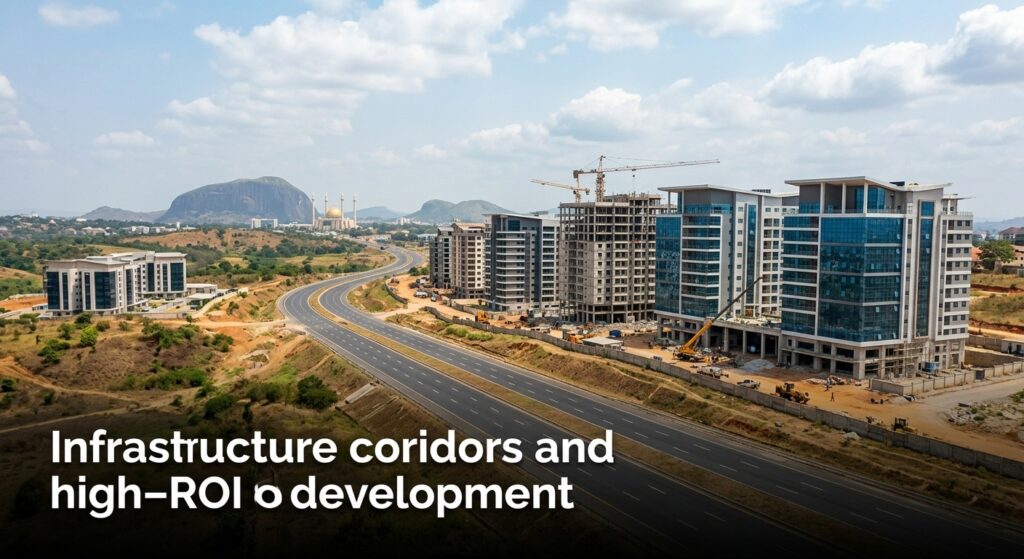
The single biggest driver of real estate value in Abuja right now is infrastructure. The FCT administration’s aggressive completion of major arterial roads, bypasses, and the rehabilitation of key transit lines have turned formerly “remote” suburban districts into goldmines.
Corridors like Kyami, the Airport Road axis, and Idu are no longer distant outposts; they are the new frontiers of mid-market luxury. Properties along these newly paved routes are appreciating rapidly because they offer something Maitama cannot: open space, modern master-planning, and highly accessible entry prices.
2. Smart Money Chooses “Value & Structure” Over “Name”
The era of paying astronomical premiums just for an old address is fading. Today’s buyers—particularly younger tech professionals, corporate executives, and diaspora Nigerians—are demanding strict structural integrity, smart home automation, and 24/7 localized estate security.
This has caused a massive investment migration to places like Katampe Extension, Guzape, and Jahi. To match this demand, top-tier local developers are stepping in. For instance, Everview Properties Limited has built a strong reputation by offering diversified portfolios across these high-growth zones, ensuring that structural premium meets modern infrastructure.
3. The Short-Let Revolution vs. Traditional Renting
Landlords are growing weary of the traditional two-year rent cycle, which often fails to keep pace with economic shifts. Instead, the Abuja market is pivoting heavily toward short-let apartments and corporate co-living spaces, especially in highly commercialized neighborhoods like Wuse 2, Jabi, and central Maitama.
Driven by an influx of business consultants, NGO workers, and international diplomats, a well-managed 2-bedroom short-let apartment in Wuse 2 can generate more yield in four months than a traditional annual tenant pays in a year.
4. Peripheral Land Banking for Long-Term Wealth
For retail investors and first-time buyers looking to enter the market under ₦10 Million, the trend is moving entirely outward. As the inner city becomes increasingly dense, Abuja’s boundaries are expanding rapidly toward Lugbe and Kuje.
This peripheral shift is where affordability meets massive future upside. Companies like Everview Properties Limited are heavily anchoring this trend with highly sought-after, FCDA-approved master-planned layouts like Peridot Estate in Kuje. With residential options starting as low as ₦4.5M to ₦10M, entry-level buyers can securely position themselves directly in the path of urban sprawl.
Investor Guardrails: Navigating Abuja Real Estate Risks Safely
While Abuja remains one of the safest real estate havens in Sub-Saharan Africa, it is not without pitfalls. The rapid pace of development has brought structural risks and document authenticity issues into sharp focus.
Before deploying your capital into any trending Abuja corridor, remember these rules:
- Verify with AGIS: Never purchase land without a thorough, up-to-date legal search at the Abuja Geographic Information Systems (AGIS) to confirm the Certificate of Occupancy (C of O) or Right of Occupancy (R of O). Partnering with transparent corporate entities like Everview Properties guarantees you only interact with 100% verified, genuine FCDA titles.
- Audit Developer Credibility: Stick to vetted developers with a proven track record of physical delivery to avoid off-plan abandonment or substandard finishes.
- Look for Flexible Entry Points: To combat current economic squeezes, favor trusted firms that offer structured, flexible payment plans to spread your capital smoothly over several months.
The Bottom Line
Abuja’s real estate market has matured. The gold rush is no longer about just owning any piece of the city; it is about strategic placement along the paths of infrastructure growth. Whether you are banking land in Kuje or building a smart portfolio closer to the city center, the investors who win this year will be those who prioritize accessibility, structural value, and bulletproof documentation.
Ready to Inspect and Invest?
Don’t just read about market trends—experience them firsthand. If you’re ready to secure a verified piece of Abuja’s future, you can connect directly with the team at the Everview Properties Main Office at Plot 34/36 Okotieboh Crescent, Utako, Abuja, or follow their active weekly project rollouts on their official channels.